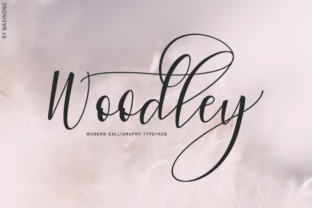
Woodley: A Font That Adds Personality to Every Project
In the world of typography, a font can be more than just a means of communication—it can be a statement. Woodley is one such font that brings a unique blend of elegance and flair to any design. With its swashy, ornate style, Woodley stands out in a sea of more traditional typefaces, offering a distinctive visual identity that captures attention and conveys character.
Whether you're designing a wedding invitation, crafting a brand logo, or creating a digital presentation, Woodley has the potential to elevate your work from ordinary to extraordinary. Its bold strokes and flowing lines give it a sense of movement and sophistication, making it ideal for projects that aim to evoke romance, refinement, or artistic expression.
The Character of Woodley
Woodley's design is rooted in calligraphic tradition, with its exaggerated serifs and decorative elements lending it a sense of timeless charm. The font’s curves are fluid and expressive, giving it an almost hand-drawn quality that adds a personal touch to any text. This makes it particularly well-suited for projects that require a touch of individuality or a nod to historical aesthetics.
One of the most striking features of Woodley is its versatility. While it may appear ornate at first glance, the font is surprisingly adaptable. It works well in both large-scale applications, such as headlines and banners, and in smaller formats, like captions or labels. Its legibility remains intact even at smaller sizes, ensuring that it doesn’t sacrifice clarity for style.
Applications of Woodley in Design
Woodley is particularly effective in designs that aim to convey a sense of luxury or nostalgia. For instance, in the realm of event planning, this font can be used to create elegant invitations for weddings, galas, or themed parties. Its refined appearance helps set the tone for the occasion, making it a popular choice among designers who want to add a touch of class to their work.
Beyond events, Woodley also finds its place in branding and marketing. Businesses that want to communicate a sense of sophistication or creativity often turn to this font for logos, taglines, or promotional materials. Its boldness and uniqueness make it stand out in a crowded market, helping brands carve out a distinct identity.
For content creators and educators, Woodley can be a valuable tool when designing educational materials, infographics, or presentations. Its aesthetic appeal can help engage audiences and make information more visually appealing. However, it’s important to use it strategically—overuse can lead to visual clutter, so it’s best reserved for key elements rather than entire blocks of text.
Advantages of Using Woodley
One of the main advantages of Woodley is its ability to add personality to a design without being overwhelming. Unlike some highly stylized fonts that can be difficult to read, Woodley maintains a balance between style and readability. This makes it suitable for a wide range of applications, from editorial layouts to digital interfaces.
Another benefit is its adaptability across different media. Whether you're working on print or digital projects, Woodley retains its visual impact. This is especially useful for designers who need a consistent look across multiple platforms. Additionally, the font’s availability in various weights and styles allows for greater flexibility in composition and hierarchy.
From a creative standpoint, Woodley offers a way to express individuality. In a world where many designs rely on standard typefaces, using a font like Woodley can help differentiate a project and make it more memorable. It encourages experimentation and can inspire new approaches to typography in both professional and personal work.
Considerations When Using Woodley
While Woodley is a powerful font, it’s not always the best choice for every project. Its ornate style may not be appropriate for minimalist or modern designs that prioritize simplicity and clarity. In such cases, a cleaner typeface might be more effective in conveying the intended message.
It’s also important to consider the context in which Woodley will be used. For example, in digital environments, the font’s performance across different devices and screen sizes should be tested to ensure that it renders consistently. Similarly, in print, the resolution and ink coverage should be taken into account to avoid issues with legibility or quality.
Finally, when using Woodley in professional settings, it’s essential to maintain a level of restraint. Overusing the font or pairing it with other similarly styled typefaces can result in a chaotic visual experience. Instead, using it as a focal point within a larger typographic system can help achieve a balanced and cohesive design.
Woodley in the Broader Typographic Landscape
Woodley occupies a niche within the broader world of typography, offering a refreshing alternative to more conventional fonts. It sits somewhere between traditional serif typefaces and modern, geometric designs, blending the best of both worlds. This hybrid approach makes it appealing to a wide range of users, from those who appreciate classic typography to those looking for something more contemporary.
As trends in design continue to evolve, fonts like Woodley are becoming increasingly valued for their ability to add depth and character to visual communication. They allow designers to move beyond functional typography and explore the emotional and aesthetic dimensions of text. In this way, Woodley not only enhances the look of a project but also contributes to its overall narrative and impact.
Ultimately, the success of Woodley lies in its ability to transform simple text into something visually compelling. Whether used in a small detail or as the centerpiece of a design, it has the power to capture attention and convey a sense of style and sophistication. For anyone looking to add a touch of flair to their work, Woodley is a font worth considering.